Archive for November 7th, 2026
PCB Material Properties and Lessons I Didn’t Know I Didn’t Know
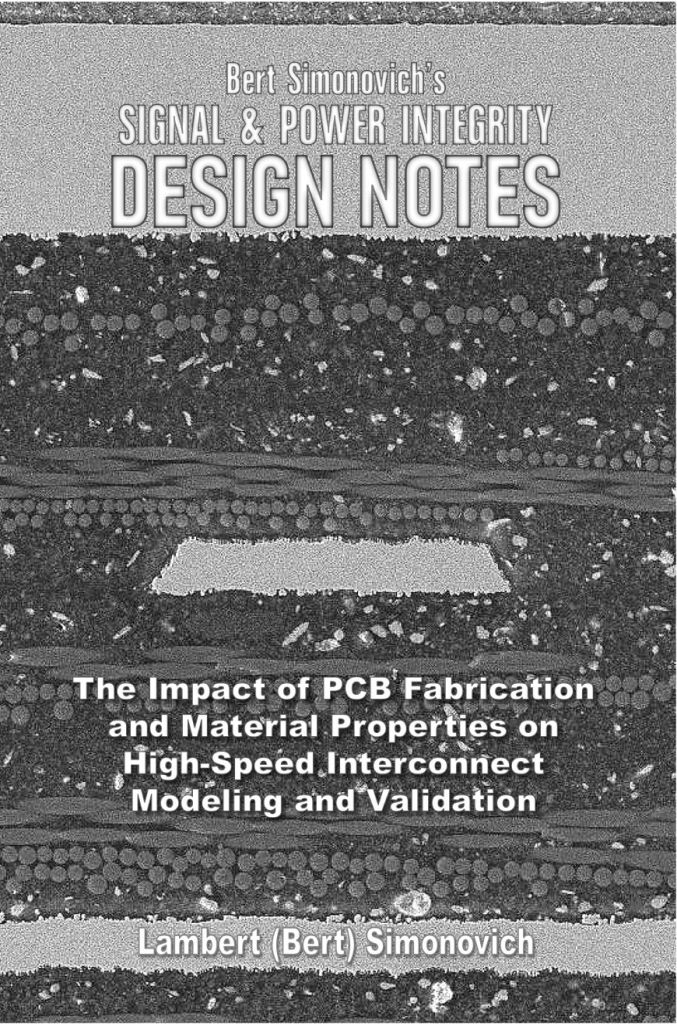
Throughout my career, I often found myself navigating the space between what I knew, what I didn’t know, and what I didn’t know I didn’t know. That last category shaped my journey more than anything else. It pushed me to stay curious, keep learning, and question assumptions even when I thought I understood the problem in front of me.
I began my working life in an era when hand-drawn schematics and manual PCB routing were the norm. Apple was just beginning the personal computer age. The path from then until now was shaped by discoveries, collaborations, and unexpected opportunities that continually revealed how much more there was to learn.
My early years at Bell Northern Research (BNR) were formative. I worked on projects that exposed me to the nuances of PCB layout and thick-film hybrids. The T1 line repeaters I worked on ran at 1.544 Mb/s, and we wire-wrapped discrete 7400 TTL logic prototypes. Schematics and PCB layout were all done manually instead of with the CAD software we use today. I never imagined that five decades later I would be contributing to modelling methods and simulating 112 Gb/s serial links instead of building breadboards.
Those experiences taught me the value of understanding how things are built, not just how they are designed. They also taught me humility. Every time I thought I had mastered a concept, a new challenge appeared that showed me just how much I still didn’t know. That pattern continued throughout my time at Nortel, whether I was designing new backplanes for next-generation high-performance platforms, exploring early PAM-4 SERDES technologies, or learning the fundamentals of signal integrity from trusted mentors.
The collapse of Nortel in 2009 marked a turning point in my life. Losing a thirty-two-year career was difficult, but it opened the door to a period of intense professional growth. After incorporating my consulting business, Lamsim Enterprises Inc., I was pushed to deepen my understanding of signal integrity and modelling. Consulting forced me to publish, collaborate, and contribute to the broader engineering community. My early work on differential via modelling, and later the Cannonball conductor roughness model, grew out of a desire to understand the underlying physics more clearly and make those insights accessible to others. Many of those discoveries began with simple questions about why measured data didn’t match expectations. Each time, the answer revealed something I didn’t know I didn’t know.
After fifty years in the electronics industry, I found myself reflecting on the path that brought me here. The industry changed dramatically during that time, but the spirit of curiosity and collaboration stayed the same. I benefited from the mentorship of others, and I tried to pay that forward through my papers, articles, webinars, and countless technical discussions. I’ve always believed that knowledge gains value when it’s shared, and that each generation of engineers builds on the foundations laid by those who came before.
This book brings together decades of research, consulting experience, published papers, and lessons learned. It is written for engineers who want a deeper understanding of how PCB fabrication and material properties influence high-speed interconnect modelling and validation.
Whether you’re just beginning your journey or have spent years in the field, I hope this book helps you solve problems more effectively, avoid a few mistakes, and perhaps discover something you didn’t know you didn’t know.
And that’s why I wrote this book. You can learn more about it on Amazon.